
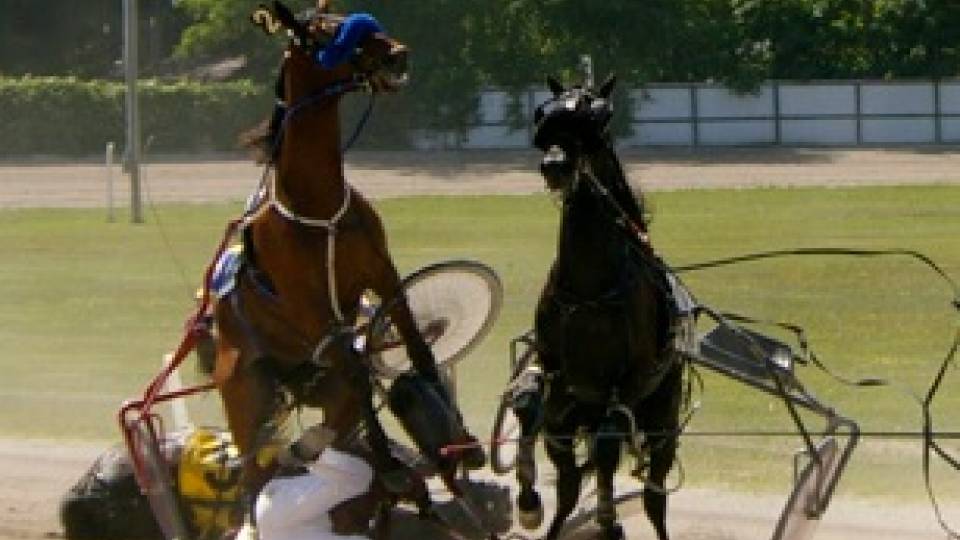
MFOA continues to question harness racing in Maine!
MFOA has a very long history with the Maine harness racing industry.
In 2010, MFOA organized a four-year public awareness campaign with subsequent proposed legislation in 2013 to ban horse slaughter in Maine for human consumption, as well as ban their transportation (often poor preforming race horses, young and old) through Maine to slaughter plants in Quebec. MFOA’s bill went to the Maine House of Representatives and Maine became the first-in-the-nation to pass such legislation, but unfortunately, the bill was not passed in the Senate conference committee.
The harness racing industry, and its complicity in this issue, then became MFOA’s focus. Our campaign to expose Maine harness racing as a heavily state subsidized, outdated, and cruel form of entertainment, even as it continues to drastically decline in popularity. In the 2017, a signature-led “Horseracing Jobs Fairness” ballot initiative to develop and license a casino in southern Maine was overwhelming defeated by voters. MFOA was part of the coalition that opposed the initiative and spoke at press conferences highlighting the harness racing industry as an issue.
In 2019, MFOA sponsored LD 715 “An Act to Change the Allocation Formula for Revenue from Slot Machines” to review the taxpayer revenue that goes into the Cascade Fund. Cascade’s monies are distributed to worthy programs in education, health, and tax relief; however, the vast majority of that funding is allocated to five line items that subsidize harness racing. Our bill to change that allocation never made it out of committee, as it was deemed anti-agricultural fair.
Yet MFOA has never let the issue die. We will persist in our efforts to end the mistreatment of this most noble animal in Maine. Our latest effort is a Portland Press Herald Op-Ed by MFOA’s Robert Fisk, Jr. that was published on August 21, 2026. MFOA Legislative Committee members, Jayne Winters and Simon Thompson contributed.
It’s time for Maine to rein in support for harness racing | Opinion
 pressherald.com/2026/08/21/its-time-for-maine-to-rein-in-support-for-harness-racing-opinion
August 21, 2026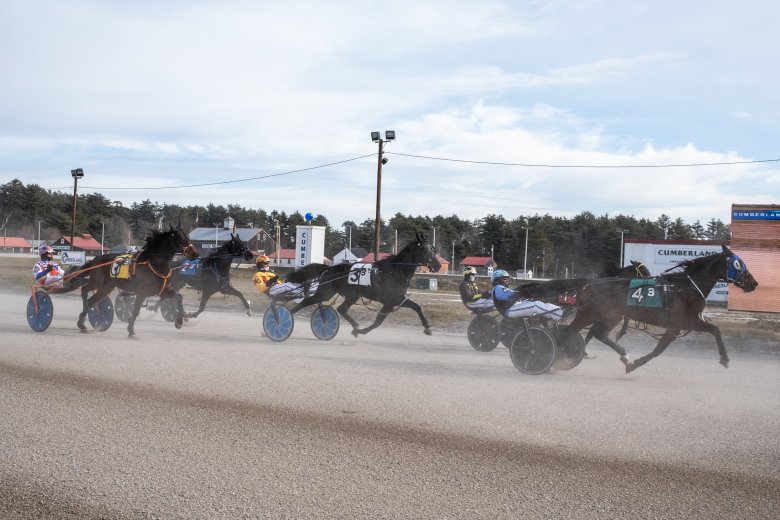
Robert Fisk Jr., a former state legislator from Falmouth, is founder and executive director of Maine Friends of Animals.
The state of Maine’s continued subsidization of the harness racing industry deserves renewed scrutiny on fiscal grounds, as its continuance makes less and less sense.
The following is the case for reallocating this funding toward higher-return uses of taxpayer and cascade fund dollars:
- Cascade Funds, generated by revenue from slot machines, are distributed to a variety of worthy Maine programs, including Fund for a Healthy Maine, Department of Education K-12, USM & Community College System Scholarship funds, Maine Maritime Academy, and tax relief. Its largest allocation, by far, however, is the combination of five line items associated with the harness racing industry — funding that could otherwise expand support for these other programs.
- Maine harness racing has experienced declining revenues and attendance for over three decades, alongside aging facilities and increased competition from casinos and online gambling. As participation and market relevance have fallen, the state’s level of financial support has not been adjusted to reflect that trend, raising questions about the return taxpayers are getting on this investment.
- From 2005–2015, the Fund to Encourage Racing at Maine’s Commercial Tracks, Agricultural Fair Support Fund, Harness Racing Commission and Purses, Sire Stakes (breeding), and Fund to Stabilize Off Track Betting were subsidized by the state through Cascade Funding at $112,000,000, or roughly $9.3 million per year. From 2016–2024, the total was $96,227,822, or about $12 million a year — an increase in annual subsidy even as the industry’s own revenues continued to decline.
- The legislature failed to implement a requirement for the industry to report on how the money is spent when the fund was established or any time subsequently. The Maine Harness Racing Commission holds the dual role of both regulating horse racing and promoting racing and racehorse breeding, which limits the separation typically expected between a regulator and the industry it oversees — a structure that makes independent fiscal accountability more difficult to ensure.
- These financial pressures are not new: the live handle (total amount wagered) fell over 30%, from $45.2 million in 1987 to $29.8 million in 1991. Off-track betting was introduced as a response, but the underlying Maine product has not recovered. Of the $10.8 million in total wagering handle that flowed through Maine’s harness racing and off-track betting system in 2025, only about $1.4 million — roughly 13% — was wagered on live races actually run in Maine. The remainder was bet on races run in other states and simulcast into Maine facilities, meaning the large majority of the activity this subsidy supports is not sustaining Maine’s own racing product at all. (Source: Maine State Harness Racing Commission, 2025 Annual Report to the Legislature)
- Harness racing operates as a business, and its ongoing costs — including feed, supplements, veterinary care, wages, whipping and animal welfare fines, advertising, and training, stable, and transportation expenses — have consistently exceeded the revenue the industry generates on its own. The current subsidy structure has no end date and includes no benchmark or expectation for the industry to move toward self-sufficiency, which is inconsistent with sound fiscal stewardship of public funds.
- Despite receiving well over $1 million apiece in direct state subsidy in 2025, both of Maine’s commercial harness tracks, Bangor Raceway and First Tracks in Cumberland, operated at a loss year. The subsidy is not moving these facilities toward self-sufficiency; it is offsetting losses that recur year after year with no end in sight. (Source: Maine State Harness Racing Commission, 2025 Annual Report to the Legislature).
If you think enough is enough, contact your legislator and ask them to sponsor legislation to end this continued waste of taxpayer dollars on an activity that is outdated, drastically faded in popularity and has no way back. At what point does an indefinite subsidy for a shrinking industry stop being justifiable. Whether it is just the fiscally responsible thing to do or it is prudent to use those funds for more worthy programs, this long irresponsible misdirection of state funds needs to finally end.
